
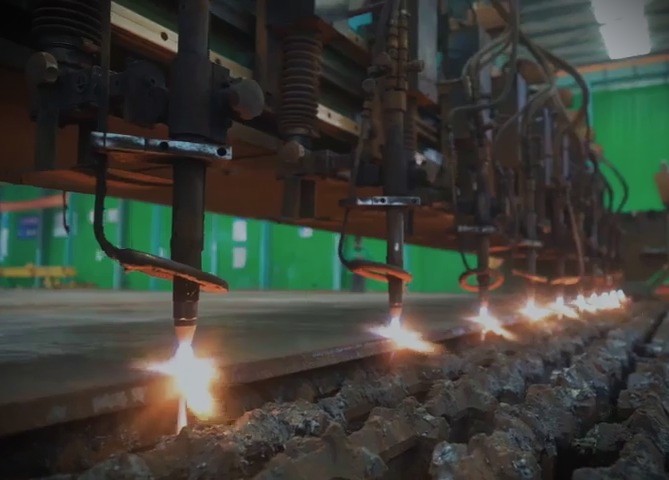
Flame Cutting for Thick Steel Plate and Heavy Fabrication Parts
CNC flame cutting for structural steel profiles, heavy plate components, and drawing-based custom flame cut parts from 30mm to 200mm. Send basic project requirements first through the contact form — drawings are not uploaded on this page and can be shared later by email attachment after your inquiry is received.
Cutting Solutions Overview → · Laser Cutting →
Manual RFQ review — contact-only quotation path
Laser or flame — which cutting method fits your plate?
YUNCUT public cutting methods are Laser Cutting and Flame Cutting under Cutting Solutions. This page focuses on thick plate flame cutting; method fit for your project is confirmed during manual review.
Thinner plate & tighter edges
Laser cutting is usually suitable for thinner steel plate and cleaner edge requirements. See the laser cutting detail page or the Cutting Solutions overview.
Thick carbon steel plate
Flame cutting is typically the practical option for thick structural and heavy carbon steel plate — especially above 55mm — where laser may not be the best fit.
To recommend a method, send: thickness · material grade · drawing or specification · edge or tolerance expectation · application.
Send Requirements First Explore Cutting SolutionsWhen flame cutting makes sense for your project.
For heavy fabrication buyers who need thick plate or structural profile cutting reviewed against drawing and project requirements — not a universal solution for every cutting need.
Thick steel plate
Structural and heavy-section plate typically from 30mm upward, where flame cutting is the practical process.
Heavy fabrication parts
Base plates, frames, gussets, and large custom replacements for machinery and structural builds.
Structural steel profiles
Large plate components and heavy sections cut to drawing when panel size and thickness fit flame capability.
OEM, machinery, and project orders
Chassis sections, wear plate, and project-driven thick plate work reviewed for method fit before production.
Repeat-order discussion
Batch runs and repeat thick plate programs can be reviewed through the same manual contact path.
International export buyers
Export packing and overseas communication discussed per order — not assumed as a one-size standard.
What heavy-section buyers need confirmed early.
Thick plate flame cutting raises different questions than thin laser work. These are the most common before RFQ.
Is flame cutting right for my thick plate part?
Above 55mm, flame is typically the practical option. Between 30–55mm, method depends on tolerance — share your requirement during manual review and we recommend laser or flame before quotation scope is confirmed.
Will drawing and specification requirements be understood?
Material, thickness, geometry, edge condition, and tolerance expectations are reviewed during manual quotation review. Accurate scope confirmation depends on drawing or written specification — not assumptions from a brief message alone.
What tolerance and surface finish should I expect?
Typical flame cutting tolerance is ±0.5–1mm depending on geometry — wider than most laser bands. Cut surface is project-dependent — rougher than laser. Do not assume ±0.1mm on thick flame-cut plate. Final tolerance, edge treatment, and surface expectations are confirmed at quotation and project review — not guaranteed for every geometry without review.
Can parts be packed and prepared for export?
Packing method, protection, and export preparation are discussed against confirmed order requirements. Parts are inspected before packing where applicable.
How does flame cutting relate to Cutting Solutions?
Cutting Solutions is the overview for method selection. Flame Cutting is the thick-plate process option covered there — use this page when heavy structural work is the primary question.
What is the RFQ path?
There is no instant quote, online pricing, upload widget, or process-selection wizard on this page. Submit project details through /contact/#quote-form for manual RFQ review.
Thick plate capability at a glance.
Final tolerance, edge treatment, and panel feasibility depend on material grade, thickness, geometry, and application — confirmed during manual quotation and project review.
- Process
- CNC flame / gas cutting
- Thickness
- 30–200mm structural and heavy plate
- Typical tolerance
- ±0.5 ~ ±1.0 mm depending on geometry — confirmed at quotation
- Minimum hole
- ≥0.7 × Material Thickness
- Torch configuration
- 10 / 12 Torch
- Panel size
- Up to 5500×30000mm — subject to project confirmation
- Materials
- Carbon steel, low alloy steel, high-strength steel, and wear plate only — not stainless, aluminum, galvanized, or copper/brass
- After cutting
- Slag removal, deburring, grinding, beveling available when in scope
Smaller holes may be achievable depending on material grade, thickness, geometry and project requirements.
To start: send basic requirements through the contact form — material grade, thickness, quantity, part size, destination, and application. Drawings follow by email attachment after your inquiry is received.
When flame cutting is the right method → · Thick plate thickness ranges →
Send Requirements FirstCompare methods and confirm documentation scope.
Capability comparison for thickness, tolerance, holes, and materials. Laser detail: laser cutting capability.
| Parameter | Laser Cutting | Flame Cutting |
|---|---|---|
| Maximum thickness | 55mm | 200mm |
| Typical production range | 0.5–55 mm | 30–200 mm |
| Tolerance | ±0.1 ~ ±0.3 mm | ±0.5 ~ ±1.0 mm |
| Minimum hole diameter | ≥0.4 × Material Thickness | ≥0.7 × Material Thickness |
| Maximum sheet size | 3500 × 26000 mm | 5500 × 30000 mm |
| Torch configuration | Not applicable | 10 / 12 Torch |
Maximum thickness
- Laser Cutting
- 55mm
- Flame Cutting
- 200mm
Typical production range
- Laser Cutting
- 0.5–55 mm
- Flame Cutting
- 30–200 mm
Tolerance
- Laser Cutting
- ±0.1 ~ ±0.3 mm
- Flame Cutting
- ±0.5 ~ ±1.0 mm
Minimum hole diameter
- Laser Cutting
- ≥0.4 × Material Thickness
- Flame Cutting
- ≥0.7 × Material Thickness
Maximum sheet size
- Laser Cutting
- 3500 × 26000 mm
- Flame Cutting
- 5500 × 30000 mm
Torch configuration
- Laser Cutting
- Not applicable
- Flame Cutting
- 10 / 12 Torch
Smaller holes may be achievable depending on material grade, thickness, geometry and project requirements.
Final cutting capability depends on material grade, thickness, plate size, geometry, tolerance and engineering review.
Flame materials are limited — laser covers more.
| Material | Laser Cutting | Flame Cutting |
|---|---|---|
| Carbon Steel | Supported | Supported |
| Low Alloy Steel | Supported | Supported |
| High Strength Steel | Supported | Supported |
| Wear Plate | Supported | Supported |
| Stainless Steel | Supported | Not Applicable |
| Aluminum | Supported | Not Applicable |
| Galvanized Steel | Supported | Not Applicable |
| Copper / Brass | Supported | Not Applicable |
Carbon Steel
- Laser Cutting
- Supported
- Flame Cutting
- Supported
Low Alloy Steel
- Laser Cutting
- Supported
- Flame Cutting
- Supported
High Strength Steel
- Laser Cutting
- Supported
- Flame Cutting
- Supported
Wear Plate
- Laser Cutting
- Supported
- Flame Cutting
- Supported
Stainless Steel
- Laser Cutting
- Supported
- Flame Cutting
- Not Applicable
Aluminum
- Laser Cutting
- Supported
- Flame Cutting
- Not Applicable
Galvanized Steel
- Laser Cutting
- Supported
- Flame Cutting
- Not Applicable
Copper / Brass
- Laser Cutting
- Supported
- Flame Cutting
- Not Applicable
Documentation available with order scope.
- Material Test Certificate (MTC)
- First Article Inspection
- Dimensional Inspection Report
- Packing List
- Quality Traceability
Third-party inspection: Available upon request.
Final cutting capability depends on material grade, thickness, plate size, geometry, tolerance and engineering review.
100mm and heavier plate requires case-by-case feasibility review.
Flame cutting is suitable for thick structural plate, but 100mm+ work is not confirmed from thickness alone. YUNCUT reviews each project manually before quotation scope is agreed.
Grade and preheat
Carbon, high-strength, and wear-resistant grades may need different preheat or process notes — confirmed during review.
Part size and holes
Plate size, hole patterns, narrow slots, edge distance, and web sections affect flame fit and sequence planning.
Heat and flatness
Thick cuts can introduce thermal deformation risk — critical dimensions and application context should be shared early.
Not one fixed band
Typical flame bands are coarser than laser. Do not assume ±0.1mm on thick flame-cut plate — confirmed at quotation.
Slag and finish
Slag removal, grinding, and weld-ready edge requirements are scoped per order — not implied in every base price.
Machining allowance
Precision-critical areas may need secondary machining, drilling, or beveling — discussed when confirmed in quotation scope.
Flame cutting tolerance is typically wider than laser — and heat can affect thick plate parts.
Final tolerance and flatness expectations are confirmed during manual drawing review and quotation. Flame cutting is a thick-plate process — not a universal precision substitute for laser work.
Flame tolerance bands
Typical flame cutting tolerance is ±0.5–1mm depending on geometry — wider than most laser bands on thinner plate.
Thermal deformation risk
Thick plate cutting may involve heat-affected zones. Part geometry, holes, narrow webs, edge distance, and cut sequence can affect flatness and dimension stability.
Share application context
Send application requirements and critical dimensions early. For precision-sensitive areas, secondary machining or machining allowance may be recommended.
View tolerance guidance → · Request Flame Cutting Review by Email →
Prepare these details for a useful flame cutting RFQ.
Start with basic requirements through the contact form or email. Drawings are not uploaded on this website — after your initial inquiry is received, YUNCUT follows up by email and you can send DXF, DWG, PDF, STEP, STP, or ZIP files as email attachments. If your drawing package is incomplete, send what you already have.
Drawing or specification
DXF, DWG, PDF, STEP, STP, or written specification — shared by email after initial inquiry, not through this page.
Material grade
Known grade or general steel type for thick plate work.
Thickness
Plate thickness or approximate range within the flame band.
Quantity
Piece count, batch size, or estimated weight.
Part size / profile
Approximate dimensions or structural profile description.
Destination
Delivery country or region for export planning.
Application
Structural, machinery, wear, or replacement use context — helps recommend laser or flame.
Edge / tolerance expectation
Target dimensional tolerance, edge quality, or weld-prep needs — confirmed during manual review, not assumed from thickness alone.
Quality / packing / secondary needs
Slag removal, grinding, beveling, inspection scope, and export packing requirements.
Confidential projects: you may send a simplified drawing first, omit sensitive details until NDA is arranged, or ask before sending drawings if confidentiality is a concern.
Contact first — drawing files follow by email attachment.
Flame cutting suitability, tolerance expectations, edge treatment, and export needs are discussed during manual quotation review — not assumed from a thickness-only message. There is no on-page drawing upload on this website.
Send basic requirements
Share material, thickness, quantity, destination, application, and known process needs through the contact form or email — requirements first, not full drawing upload.
Email drawing attachments
After YUNCUT receives your inquiry, the team follows up by email. You can then send DXF, DWG, PDF, STEP, STP, or ZIP files as email attachments. No drawing files are stored on this website.
Manual review and quotation
Thickness band, flame vs laser fit, tolerance, hole feasibility, heat distortion risk, edge requirements, and preheat needs are reviewed before production scope is confirmed.
Flame cutting within Cutting Solutions.
These pages work together — Flame Cutting is one of the process options under Cutting Solutions, not a separate top-level group.
Cutting Solutions
Overview for method selection — Laser and Flame process options, engineering review entry, and routing to finishing or secondary processing.
Flame cutting (this page)
Specific thick plate and heavy fabrication cutting method — structural profiles, large components, and buyers asking whether flame is right for their thickness.
Not for every cutting need
Flame cutting is not a substitute when laser tolerance is required on thin plate. Method fit is confirmed during manual review.
Heavy plate where laser is not practical.
Flame cutting is used for thick structural work — not as a substitute when laser tolerance is required on thin plate.
Thickness Range
Structural plate from medium-thick sections to maximum flame cutting thickness — confirmed per project.
Typical Tolerance
Suitable for many structural applications. Tighter requirements are confirmed at quotation stage.
Maximum Panel
Large-format cutting for long beams, base plates, and heavy frames when geometry allows.
Cut Surface
Surface quality is controlled according to material, thickness and project requirements. Grinding available when smoother edges are specified in scope.
Edge Preparation
Slag removal and deburring included as standard for flame cut parts when in agreed scope.
Secondary Processing
Beveling, drilling, and related processing available after cutting when confirmed in quotation. See links below.
Flame cutting is often the first step — not the only step.
Beveling, drilling, tapping, and related processing can be included when confirmed in quotation scope — not implied in every base flame cutting price.
Beveling & weld preparation
Edge beveling for weld joints and structural preparation when required in scope.
DRILLDrilling & tapping
Holes and tapped threads on cut plate parts when confirmed per order.
COMBINEDSecondary processing
Combined cutting, finishing, and multi-process scope in one quotation discussion.
Dimensional checks, visual review, and export readiness.
Quality scope for flame cut parts is clarified during quotation review and checked again before packing and shipment.
Drawing and requirement review
Thickness, tolerance, edge condition, and packing needs reviewed before production scope is confirmed.
Dimensional and visual checks
Critical dimensions, quantity, slag removal, and edge condition checked against confirmed requirements before packing.
Packing readiness
Pallet or crate packing discussed per order based on part weight, geometry, and destination requirements.
From thick plate inquiry to export-ready parts.
A controlled path from first contact through manual review, flame cutting, inspection, and export preparation.
Prepare project information
Gather drawing or specification with material, thickness, quantity, destination, application, and required edge or packing needs.
Contact YUNCUT
Submit basic requirements through the quote form at /contact/#quote-form or by email. There is no on-page drawing upload — after your initial inquiry is received, the team follows up by email and drawing files can be shared as email attachments (DXF, DWG, PDF, STEP, STP, or ZIP).
Manual drawing and spec review
Thickness, tolerance, hole feasibility, edge requirements, and high-strength or wear-plate preheat needs are reviewed before quotation and production scope are confirmed.
Quotation
Quotation covers cutting, slag removal or grinding if required, secondary operations, inspection themes, and packing scope.
Flame cutting
Parts cut according to confirmed specifications and agreed production scope.
Inspection and shipment
Dimensions, quantity, edge condition, and slag removal checked before packing. Heavy parts secured for international dispatch per agreed packing scope.
Factory-direct thick plate processing.
Conservative facts about scale and background — not marketing superlatives.
Flame cutting from production facilities with on-site inspection — not a broker.
Steel plate processing experience including thick-section flame cutting.
Broader group industrial manufacturing background supporting production coordination.
Annual steel plate processing scale across production operations.
Slag removal, dimensions, and packing verified before shipment where in scope.
Crates and reinforced packing for heavy structural parts when agreed per order.
Thick parts need clear edge and packing confirmation.
Packing method, protection, and export preparation are discussed against confirmed order requirements — not promised as one universal standard.
Slag and Edge Check
Slag deposits removed from cut edges. Grinding added when weld-ready surfaces are specified in scope.
Dimensional Inspection
Critical dimensions and hole locations checked against confirmed requirements before packing.
Export Packing
Pallets or wooden crates selected based on part weight, geometry, and destination requirements discussed per order.
Review the full inspection workflow before placing a thick plate order.
View Inspection ProcessEuropean and international buyer communication
European support through Aoke Industries ApS, our Denmark-based European Contact Point, helps buyers coordinate flame cutting discussions with clearer communication and less time-zone friction.
Aoke Industries ApS supports European sourcing discussions, business communication, and follow-up. Quotation review and production coordination remain connected with the YUNCUT factory team — Aoke is a contact point, not a European manufacturing facility.
When a project requires local coordination or on-site support, our European contact point can help coordinate next steps when required and feasible — not guaranteed everywhere.
YUNCUT has experience supporting European buyers, including repeat purchasing from Spain-based customers. Customer identities remain confidential.
Aoke Industries ApS
Denmark-based European Contact Point
Supports European sourcing discussions, business communication, and follow-up for thick plate flame cutting inquiries.
No instant quote — manual review through contact.
YUNCUT does not offer instant online pricing, on-page drawing upload, quote calculators, or process-selection wizards on this capability page.
Prepare project details
Drawing or specification, thickness, material, quantity, destination, and application.
Follow quotation process
Review how drawing review and scope confirmation work on the quotation process page.
Where flame cutting is typically used.
Typical thick plate applications — final method fit still confirmed during manual review.
Heavy Equipment Frames
Main frames, chassis sections, and base plates from thick plate sections.
Structural Connection Plates
Thick gussets, sole plates, and splice plates for building and bridge fabrication.
Mining and Industrial Wear Parts
Thick wear plate and high-strength sections where flame cutting with preheat may apply.
Large Custom Replacements
One-off thick plate replacements cut to drawing when downtime drives urgency.
Flame cutting questions before you contact us.
Do you offer laser cutting service?
Yes. Laser Cutting is a child capability under Cutting Solutions for thinner to medium plate where tighter tolerance and cleaner edges are needed. This flame cutting page focuses on thick plate work. YUNCUT is not primarily positioned as a thin-sheet laser shop; flame and heavy plate capability are the main strength here. Send thickness, grade, and application through /contact/#quote-form for method-fit review.
When should buyers choose laser cutting instead of flame cutting?
Laser cutting typically fits 0.5–55mm when tighter tolerance and cleaner edges matter. Flame cutting is usually the practical option for thick carbon steel plate — especially above 55mm. Share thickness, grade, edge or tolerance expectation, and application during manual review.
What cutting method is better for thick steel plate?
For thick carbon steel plate, flame cutting is often the practical method above 55mm. Between 30–55mm, method depends on tolerance and edge-quality needs — laser if tighter bands are required; flame if ±0.5–1mm is acceptable. Send thickness, grade, drawing, edge or tolerance expectation, and application so YUNCUT can recommend laser or flame during manual review.
Can you cut 100mm or thicker steel plate?
100mm and heavier plate can fall within the flame cutting band, but feasibility depends on material grade, plate size, part geometry, holes, heat distortion risk, edge quality needs, and downstream processing. Share basic requirements first through /contact/#quote-form — scope is confirmed during manual drawing review, not automatically from thickness alone.
How do I send drawings if there is no upload on this page?
Send basic project requirements through the contact form or email first. After YUNCUT receives your inquiry, the team follows up by email and you can send DXF, DWG, PDF, STEP, STP, or ZIP files as email attachments. There is no on-page upload system.
Can I send a simplified drawing or request an NDA first?
Yes. You may send a simplified drawing first or omit sensitive details until an NDA is arranged. For confidential heavy plate projects, contact YUNCUT before sending full drawings — use the contact form and note confidentiality in your message.
Does this website store my drawing files?
No. This page does not provide drawing upload. No drawing files are stored on this website. Send basic requirements first; share drawings by email attachment after your inquiry is open.
When is flame cutting suitable?
Flame cutting is typically suitable for thick structural plate and heavy fabrication parts. Above 55mm, flame is often the practical option. Between 30–55mm, suitability depends on tolerance — laser if you need tighter tolerance; flame if ±0.5–1mm is acceptable and the project fits thick plate work. Method fit is confirmed during manual review.
What information should I send?
Drawing or specification, material grade, thickness, quantity, part size, destination, application, and any edge, quality, packing, or secondary process needs. See the what to send section or the full quotation process page.
Can you quote without drawings?
You can start a conversation with basic project information, but accurate quotation and production scope usually require drawing or written specification review. Share what you have through /contact/#quote-form and the team will advise what else is needed.
Is flame cutting the same as Cutting Solutions?
No. Cutting Solutions is the overview for method selection. Flame Cutting is the thick-plate process option there for heavy fabrication buyers.
Can you guarantee tolerance and surface finish?
Typical flame cutting tolerance is ±0.5 ~ ±1.0 mm. Surface quality is controlled according to material, thickness and project requirements. Final tolerance, edge condition, and surface expectations depend on geometry, material, and application — confirmed during quotation and project review, not guaranteed universally without review.
Do you provide instant online pricing?
No. YUNCUT does not offer instant quote, online pricing, quote calculators, or on-page upload on this capability page. Submit project details for manual RFQ review through /contact/#quote-form.
How do European buyers coordinate?
European support is available through Aoke Industries ApS, our Denmark-based European Contact Point, for sourcing discussions and follow-up. Quotation review and production remain connected with the YUNCUT factory team.
How does heat distortion affect thick flame-cut parts?
Thick plate flame cutting can involve heat-affected zones and thermal deformation risk. Part geometry, holes, narrow webs, edge distance, and cut sequence matter. Share application requirements and critical dimensions during manual review. Precision-critical areas may need secondary machining or machining allowance — discussed when confirmed in quotation scope.
How does inspection connect with flame cutting?
Inspection scope for flame cut parts — dimensional checks, visual review, slag removal confirmation, and packing readiness — is discussed during quotation and checked before shipment where applicable. See the inspection process page for the full quality path.
Review cutting capability, process, and quality.
Share your thick plate requirements — we confirm flame fit through manual review.
Send material grade, thickness, quantity, drawing or specification, edge or tolerance expectation, and application through the contact form — not through instant online pricing or on-page file upload. YUNCUT will recommend laser or flame fit during manual review. DXF, DWG, PDF, STEP, STP, or ZIP drawings are sent by email attachment once the inquiry discussion starts.