
Laser Cutting for Steel Plate and Precision Fabrication Parts
CNC laser cutting for thinner to medium plate from 0.5mm to 55mm — cleaner edges, tighter tolerance bands, and broader material support than flame. Send basic project requirements first through the contact form — drawings are not uploaded on this page and can be shared later by email attachment after your inquiry is received.
Cutting Solutions Overview → · Flame Cutting for Thick Plate →
Manual RFQ review — contact-only quotation path
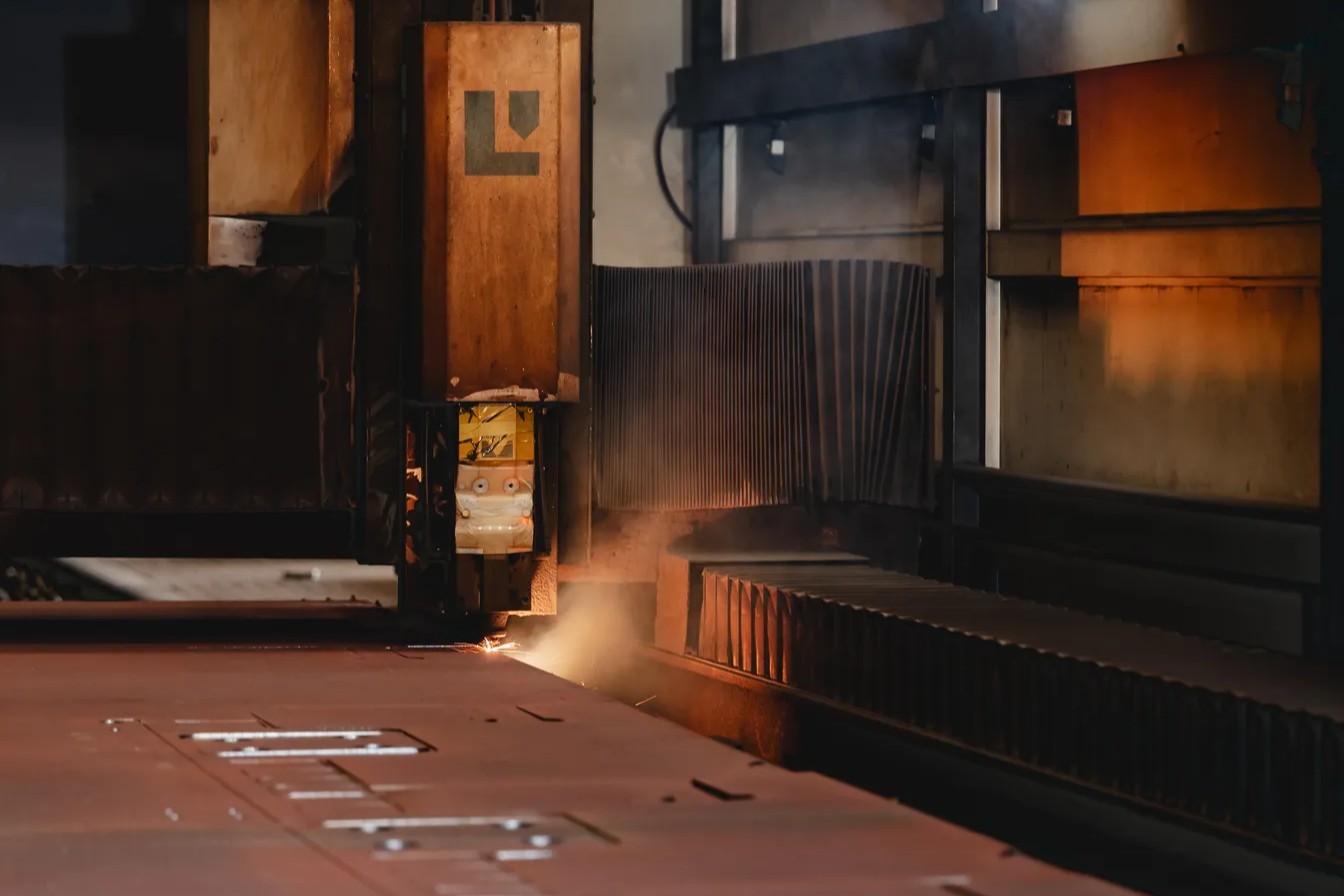
Laser or flame — which cutting method fits your plate?
This page focuses on laser cutting for thinner to medium plate. Thick carbon steel plate often fits flame better — method fit is confirmed during manual review.
Thinner plate & tighter edges
Laser cutting suits 0.5–55mm when tighter tolerance and cleaner edges matter. This page covers laser capability in detail.
Thick carbon steel plate
Flame cutting is typically the practical option above 55mm — see the flame cutting capability page.
To recommend a method, send: thickness · material grade · drawing or specification · edge or tolerance expectation · application.
Send Requirements First See Flame CuttingWhen laser cutting makes sense for your project.
For buyers who need cleaner edges and tighter tolerance on thinner to medium plate — reviewed against drawing and project requirements.
Thin to medium plate
Structural and fabrication plate typically within the 0.5–55mm laser band.
Tighter tolerance needs
Parts where ±0.1 ~ ±0.3 mm bands are more practical than flame tolerance.
Broader materials
Carbon, low alloy, high-strength, wear plate, stainless, aluminum, galvanized, and copper/brass — confirmed per project.
OEM and machinery parts
Brackets, frames, connection plates, and shaped parts cut to drawing.
Repeat-order discussion
Batch runs and repeat programs reviewed through the same manual contact path.
International export buyers
Export packing and overseas communication discussed per order.
Capability at a glance.
Final tolerance, edge treatment, and panel feasibility depend on material grade, thickness, geometry, and application — confirmed during manual quotation and project review.
- Process
- CNC laser cutting
- Thickness
- 0.5–55mm
- Typical tolerance
- ±0.1 ~ ±0.3 mm — confirmed at quotation
- Minimum hole
- ≥0.4 × Material Thickness
- Panel size
- Up to 3500×26000mm — subject to project confirmation
- Materials
- Carbon, low alloy, high-strength, wear plate, stainless, aluminum, galvanized, copper/brass
- Cut surface
- Surface quality is controlled according to material, thickness and project requirements.
- After cutting
- Deburring and edge finishing available when in scope
Smaller holes may be achievable depending on material grade, thickness, geometry and project requirements.
To start: send basic requirements through the contact form — material grade, thickness, quantity, part size, destination, and application. Drawings follow by email attachment after your inquiry is received.
Send Requirements FirstCapability comparison.
Use this table to compare thickness, tolerance, hole rules, and sheet size — then confirm method fit during manual review.
| Parameter | Laser Cutting | Flame Cutting |
|---|---|---|
| Maximum thickness | 55mm | 200mm |
| Typical production range | 0.5–55 mm | 30–200 mm |
| Tolerance | ±0.1 ~ ±0.3 mm | ±0.5 ~ ±1.0 mm |
| Minimum hole diameter | ≥0.4 × Material Thickness | ≥0.7 × Material Thickness |
| Maximum sheet size | 3500 × 26000 mm | 5500 × 30000 mm |
| Torch configuration | Not applicable | 10 / 12 Torch |
Maximum thickness
- Laser Cutting
- 55mm
- Flame Cutting
- 200mm
Typical production range
- Laser Cutting
- 0.5–55 mm
- Flame Cutting
- 30–200 mm
Tolerance
- Laser Cutting
- ±0.1 ~ ±0.3 mm
- Flame Cutting
- ±0.5 ~ ±1.0 mm
Minimum hole diameter
- Laser Cutting
- ≥0.4 × Material Thickness
- Flame Cutting
- ≥0.7 × Material Thickness
Maximum sheet size
- Laser Cutting
- 3500 × 26000 mm
- Flame Cutting
- 5500 × 30000 mm
Torch configuration
- Laser Cutting
- Not applicable
- Flame Cutting
- 10 / 12 Torch
Smaller holes may be achievable depending on material grade, thickness, geometry and project requirements.
Final cutting capability depends on material grade, thickness, plate size, geometry, tolerance and engineering review.
Laser supports a broader material list than flame.
Flame cutting is limited to carbon, low alloy, high-strength, and wear plate. Laser covers stainless, aluminum, galvanized, and copper/brass as well — confirmed per project.
| Material | Laser Cutting | Flame Cutting |
|---|---|---|
| Carbon Steel | Supported | Supported |
| Low Alloy Steel | Supported | Supported |
| High Strength Steel | Supported | Supported |
| Wear Plate | Supported | Supported |
| Stainless Steel | Supported | Not Applicable |
| Aluminum | Supported | Not Applicable |
| Galvanized Steel | Supported | Not Applicable |
| Copper / Brass | Supported | Not Applicable |
Carbon Steel
- Laser Cutting
- Supported
- Flame Cutting
- Supported
Low Alloy Steel
- Laser Cutting
- Supported
- Flame Cutting
- Supported
High Strength Steel
- Laser Cutting
- Supported
- Flame Cutting
- Supported
Wear Plate
- Laser Cutting
- Supported
- Flame Cutting
- Supported
Stainless Steel
- Laser Cutting
- Supported
- Flame Cutting
- Not Applicable
Aluminum
- Laser Cutting
- Supported
- Flame Cutting
- Not Applicable
Galvanized Steel
- Laser Cutting
- Supported
- Flame Cutting
- Not Applicable
Copper / Brass
- Laser Cutting
- Supported
- Flame Cutting
- Not Applicable
Precision plate where flame is not the first choice.
Laser cutting is used for thinner to medium plate work — not as a substitute when thick carbon steel requires flame.
Thickness Range
From thin sheet to medium structural plate within the laser band — confirmed per project.
Typical Tolerance
Tighter than typical flame bands. Final tolerance confirmed at quotation stage.
Maximum Panel
Large-format laser cutting when geometry and nesting allow.
Minimum Hole
Minimum hole diameter ≥0.4 × Material Thickness. Smaller holes may be achievable depending on material grade, thickness, geometry and project requirements.
Cut Surface
Surface quality is controlled according to material, thickness and project requirements.
Secondary Processing
Beveling, drilling, and related processing available after cutting when confirmed in quotation.
Documentation available with order scope.
Quality documents depend on quotation scope — confirm requirements during manual project review.
- Material Test Certificate (MTC)
- First Article Inspection
- Dimensional Inspection Report
- Packing List
- Quality Traceability
Third-party inspection: Available upon request.
Final cutting capability depends on material grade, thickness, plate size, geometry, tolerance and engineering review.
Prepare these details for a useful laser cutting RFQ.
Start with basic requirements through the contact form or email. Drawings are not uploaded on this website — after your initial inquiry is received, YUNCUT follows up by email and you can send DXF, DWG, PDF, STEP, STP, or ZIP files as email attachments.
Drawing or specification
DXF, DWG, PDF, STEP, STP, or written specification — shared by email after initial inquiry.
Material grade
Known grade or general material type within laser-supported materials.
Thickness
Plate thickness or approximate range within the 0.5–55mm laser band.
Quantity
Piece count, batch size, or estimated weight.
Part size / profile
Approximate dimensions or profile description.
Destination
Delivery country or region for export planning.
Application
Machinery, structural, or replacement use context — helps recommend laser or flame.
Edge / tolerance expectation
Target dimensional tolerance or edge-quality needs — confirmed during manual review.
Quality / packing needs
Inspection documents, packing, and secondary process requirements.
Dimensional checks, visual review, and export readiness.
Quality scope for laser cut parts is clarified during quotation review and checked again before packing and shipment.
Drawing and requirement review
Thickness, tolerance, edge condition, and packing needs reviewed before production scope is confirmed.
Dimensional and visual checks
Critical dimensions, quantity, and edge condition checked against confirmed requirements before packing.
Packing readiness
Pallet or crate packing discussed per order based on part weight, geometry, and destination.
Laser cutting vs related YUNCUT pages.
These pages work together — they do not compete for the same buyer question.
Steel plate cutting
Broader custom steel plate parts capability — laser and flame overview and method selection.
Laser cutting (this page)
Detail page for 0.5–55mm laser capability, materials, tolerance, and hole guidance.
Flame cutting
Thick plate and heavy fabrication — typically 30–200mm carbon and related plate.
Laser cutting questions before you contact us.
What thickness can you laser cut?
Laser cutting typically covers 0.5–55mm. Above 55mm, flame cutting is usually the practical method for thick carbon steel plate. Between 30–55mm, method depends on tolerance and edge-quality needs — send requirements through /contact/#quote-form.
What tolerance can laser cutting hold?
Typical laser cutting tolerance is ±0.1 ~ ±0.3 mm depending on part size, thickness, and geometry. Final tolerance is confirmed at quotation — not guaranteed universally without review. See tolerance guidance.
What is the minimum hole size?
Laser minimum hole diameter is ≥0.4 × Material Thickness. Smaller holes may be achievable depending on material grade, thickness, geometry and project requirements.
What materials can laser cut?
Laser supports carbon steel, low alloy steel, high-strength steel, wear plate, stainless steel, aluminum, galvanized steel, and copper/brass. Flame cutting does not apply to stainless, aluminum, galvanized, or copper/brass — see the material matrix above.
When should I choose flame instead?
For thick carbon steel plate — especially above 55mm — flame is often the practical option. See flame cutting. Share thickness, grade, and tolerance expectation for method-fit review.
What surface quality should I expect?
Surface quality is controlled according to material, thickness and project requirements. Surface expectations are confirmed at quotation based on material, thickness, and application.
Do you provide quality documents?
Available documents may include Material Test Certificate (MTC), First Article Inspection, Dimensional Inspection Report, Packing List, and Quality Traceability when in agreed scope. Third-party inspection is available upon request.
Do you provide instant online pricing?
No. Submit project details for manual RFQ review through /contact/#quote-form.
Review cutting capability, process, and quality.
Share your plate requirements — we confirm laser fit through manual review.
Send material grade, thickness, quantity, drawing or specification, edge or tolerance expectation, and application through the contact form — not through instant online pricing or on-page file upload. Final cutting capability depends on material grade, thickness, plate size, geometry, tolerance and engineering review.