
High-Strength Steel Plate for Industrial Cutting and Fabrication
S460, S690, A514 and Q690 grade families for heavy machinery, cranes, mining and structural OEM parts. Cutting method and heat input must be managed carefully — the exact standard and subgrade are confirmed before production starts.
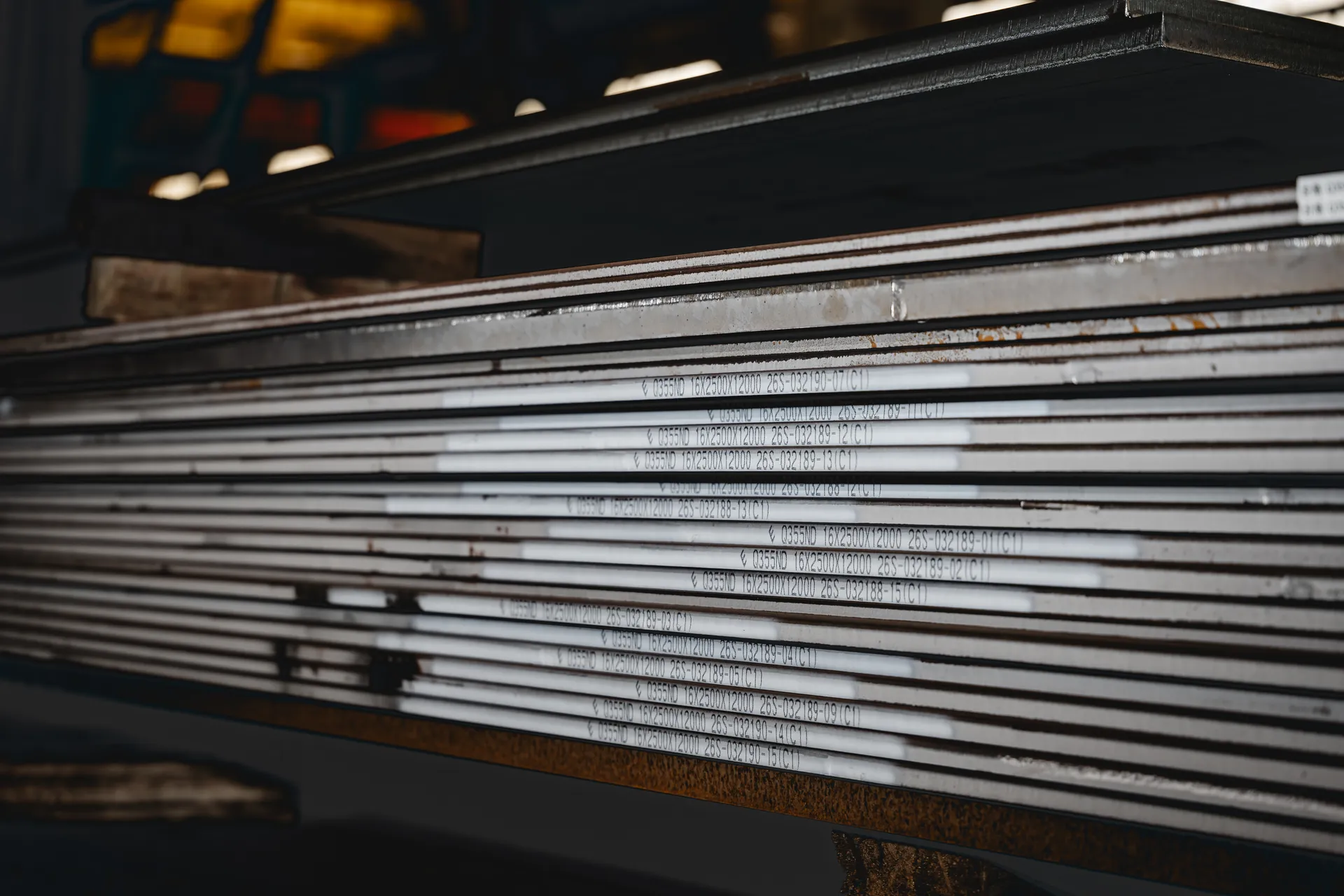
Why buyers use high-strength steel plate.
Higher minimum yield strength than general carbon steel allows lighter or stronger parts under structural load — at the cost of more careful cutting and fabrication control.
Strength where load matters
Grade families such as S460, S690, A514 and Q690 carry higher design loads for booms, frames, crane chords, and heavy structural members.
Commonly compared — not interchangeable
Cross-standard grade comparisons are review references only. Chemistry, testing, certification, and delivery condition can differ between standards and subgrades.
Process review before production
Cutting parameters, preheat where applicable, edge condition, and downstream welding are confirmed at quotation stage — not assumed from the grade name.
High-strength grade families in international sourcing.
We source to Chinese national standards and review the closest match to your specification. High-strength grades require careful confirmation — not all comparisons are direct substitutes.
| Family | Commonly Compared Standards | Strength Level | Typical Application |
|---|---|---|---|
| S460 | EN 10025 S460 · A572 Gr.65 · Q460 (GB) · no direct JIS comparison | ~460 MPa min. yield | Heavy structural parts, crane components, high-load frames |
| S690 | EN 10025 S690 · Q690 (GB) · HT690 (JIS) | ~690 MPa min. yield | Ultra high-strength structural applications |
| A514 | ASTM A514 / A517 · S690 family comparisons | Q&T high-strength plate | Quenched & tempered high-strength structural plate |
| Q690 | GB/T Q690 · S690 family comparisons | ~690 MPa min. yield | Boom sections, crane chords, mining frames |
Grades grouped in each row are commonly compared references — not automatic substitutes. Yield strength, impact testing, welding requirements, and certification differ between standards. Always confirm the exact standard and subgrade before production.
Four families international buyers ask about most.
S460 family
A higher-strength structural grade used for crane components, heavy frames, and load-bearing structures where general carbon steel is not enough. Delivery condition and subgrade (N, M, QL) affect welding and toughness — confirm both.
S690 family
Ultra-high-strength quenched and tempered plate for maximum load-to-weight design. More sensitive to heat input during cutting and welding than lower grades — process control matters more than with S355-class steel.
ASTM A514 family
North American quenched and tempered high-strength plate used in heavy equipment and structural applications. Comparable in purpose to S690-class plate, but chemistry and certification follow ASTM practice — review required.
Q690 family
The Chinese national standard grade most often compared with S690. Higher carbon equivalent than mild grades means edge cracking risk must be managed through process review and preheat where applicable.
Exact standard and subgrade — the rule, not a formality.
Two plates with the same nominal grade name can still differ in a way that matters to your project.
Subgrade matters
Delivery conditions such as S690Q (quenched and tempered), S690QL, or different impact-test designations are not interchangeable without engineering review.
Testing and certification differ
Impact testing temperature, chemistry limits, and certificate format vary between EN, ASTM, GB, and JIS standards — confirm which one your project specification requires.
Welding interacts with cutting
The heat-affected zone from cutting must be compatible with your welding procedure. State any hardness, HAZ, or preheat requirements at quotation stage.
Cutting high-strength steel plate at YUNCUT.
Both laser and flame cutting support high-strength steel within their published capability ranges — method selection depends on thickness, tolerance, geometry, and engineering review.
| Method | Thickness Range | Tolerance | Max Panel Size | Min Hole Rule |
|---|---|---|---|---|
| Laser cutting | 0.5–55mm | ±0.1 ~ ±0.3 mm | 3500×26000mm | ≥0.4 × Material Thickness |
| Flame cutting | 30–200mm | ±0.5–1mm | 5500×30000mm | ≥0.7 × Material Thickness |
Final cutting capability depends on material grade, thickness, plate size, geometry, tolerance and engineering review.
Smaller holes may be achievable depending on material grade, thickness, geometry and project requirements.
Decision factors for high-strength plate.
High-strength steel does not change the public capability ranges — it changes how carefully the process is reviewed.
Thickness
Laser covers 0.5–55mm with tighter tolerance. Flame covers 30–200mm for thick structural plate. Between 30–55mm, tolerance and edge requirements decide.
Geometry
Complex profiles, small holes, and tight nesting favor laser where thickness allows. Long, thick, or very heavy profiles typically move to flame — long narrow parts need distortion review either way.
Tolerance
Laser achieves ±0.1 ~ ±0.3 mm; flame typically ±0.5–1mm. Tolerance is confirmed per drawing — do not assume a single universal number for thick high-strength plate.
Edge condition
Laser edges need deburring; flame edges need slag removal, with grinding added when weld-ready condition is required. Edge expectations are confirmed at quotation stage.
Thermal / process review
High-strength grades are more sensitive to rapid heating and cooling. Preheat, cutting sequence, and nesting are reviewed before production to control distortion and edge cracking risk.
Downstream welding
Cutting heat input interacts with later welding. Share your welding procedure or HAZ requirements so the cutting approach stays compatible with fabrication.
Where high-strength plate parts go to work.
Heavy machinery
Boom sections, arm plates, and high-load frame members for excavators, loaders, and construction equipment — Q690/S690-class parts where standard grades would require thicker plate.
Cranes and lifting
Crane boom chords, lacing plates, and lifting equipment structures where strength-to-weight directly affects capacity and certification requirements.
Mining equipment
Primary frames and load-bearing structural members in mining machines — often combined with wear plate (NM400/AR400) on ground-contact areas in the same order.
Structural / OEM machinery
High-load structural sections, OEM machinery frames, and special vehicle components where design loads exceed general carbon steel capacity.
Send these details for a useful high-strength RFQ.
Exact information at the start reduces confirmation loops and protects the production schedule.
Exact standard and subgrade
Example: EN 10025 S690Q (not just "S690"), or ASTM A514 Grade B — with delivery condition and any impact-test designation.
Thickness and quantity
Plate thickness or range, plus piece count or estimated weight.
Drawing or specification
DXF, DWG, PDF, STEP, or written specification — shared by email after your initial inquiry, not uploaded on this website.
Tolerance requirement
Target dimensional tolerance or edge-quality expectation — confirmed during manual review, not assumed from thickness alone.
Certification requirements
Mill certificate format, third-party inspection, or specific testing requirements — confirmed at quotation stage, not after production.
Application and destination
How the part will be used and the delivery country — both affect method review and export planning.
Common questions about high-strength steel plate.
What is high-strength steel plate?
High-strength steel plate covers structural and quenched-and-tempered grades with significantly higher minimum yield strength than general carbon steel — typically S460, S690, A514, and Q690 grade families. It is used where structural load, strength-to-weight ratio, or part performance requires more than general carbon steel.
Are S460, S690, A514 and Q690 the same?
No. They are commonly compared grade families with similar strength levels, but chemistry, testing, certification, and delivery condition can differ between standards. The exact standard and subgrade must be confirmed before production — these grades are not automatic substitutes.
Can YUNCUT laser cut high-strength steel plate?
Yes — up to 55mm with adjusted parameters, subject to grade-specific process review. Thicker high-strength plate moves to flame cutting with process review. Final method depends on grade, thickness, geometry, tolerance, and engineering review.
Does high-strength steel require preheat before cutting?
Not always. Whether preheat is needed depends on the grade, thickness, specification, and process review. High-strength grades are more sensitive to thermal cycling, so YUNCUT confirms any preheat requirement at quotation stage instead of assuming standard parameters.
What should I send for a high-strength steel RFQ?
Send the exact standard and subgrade, thickness, quantity, drawing or specification availability, tolerance requirement, certification requirements, and destination country. YUNCUT confirms the material and cutting approach before production starts.
Continue reviewing grades and cutting capability.
Steel Grade Equivalents
Cross-standard comparison reference — equivalents are not direct substitutes.
Q690Q690 Cutting Guide
Why standard parameters need review for quenched and tempered grades.
CUTCutting Solutions
Laser and flame method selection for custom steel plate parts.
Flame cutting capability → · Wear plate guide → · Send requirements first →