
Steel Grade Equivalents for Buyers and Engineers
Steel grade equivalents are reference tools for procurement and engineering teams comparing Chinese (GB), European (EN), American (ASTM), and Japanese (JIS) naming systems. Use this page to structure a sourcing or cutting discussion — not to approve substitution without specification review.
Final substitution requires drawing review, project specification alignment, chemistry and mechanical property confirmation, and buyer approval before production.
Engineering disclaimer: Equivalent grades are provided for preliminary reference only. Final material substitution must be confirmed against the project specification, drawing notes, chemical composition, mechanical properties, and buyer approval.
Common equivalent searches — direct reference
Short answers for high-intent searches. Equivalent ≠ automatically interchangeable — standard, subgrade, thickness, delivery condition, chemistry, and mechanical properties can change substitution suitability.
Q355 equivalent — quick reference
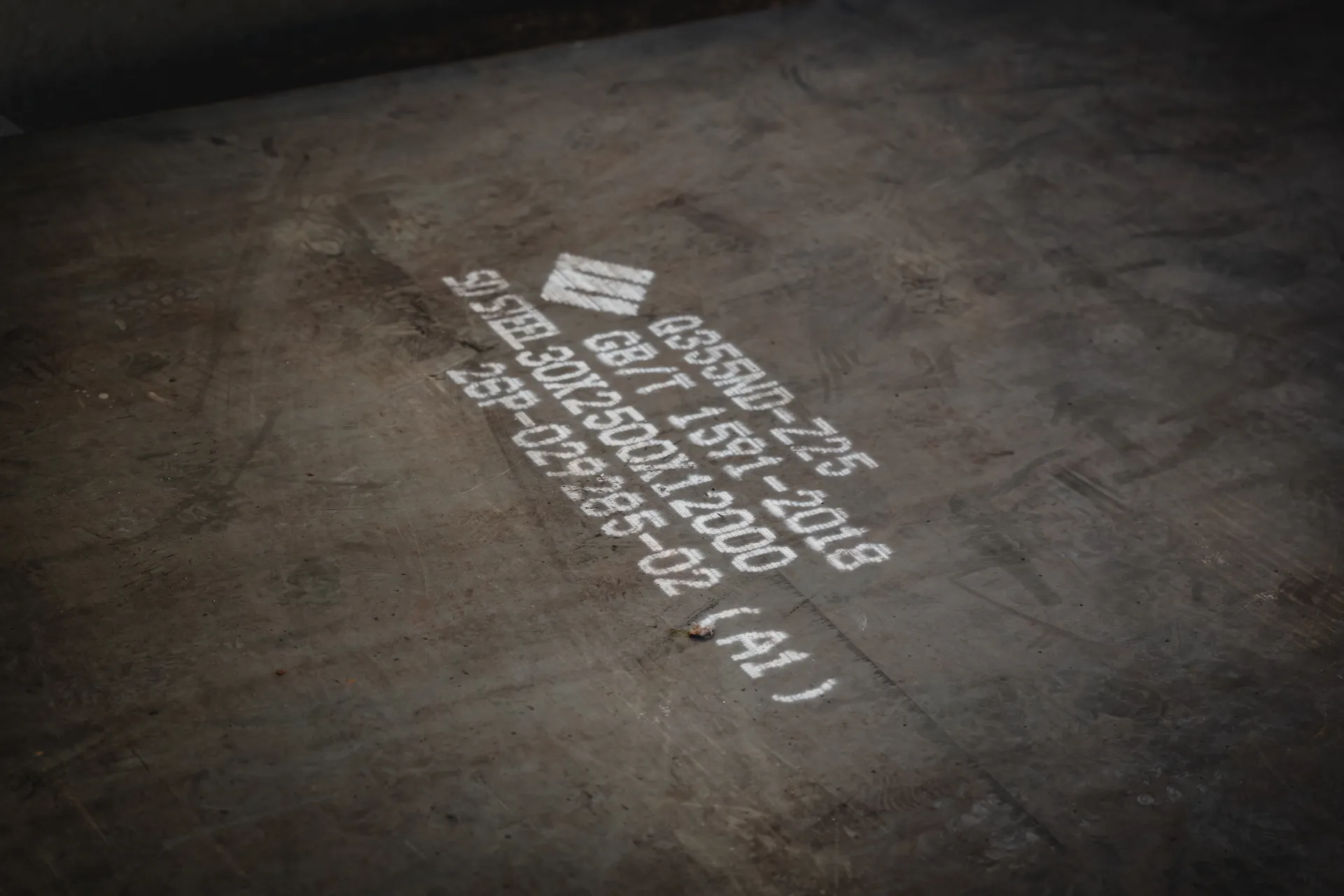
Q355 (GB/T 1591) is commonly compared with the EN S355 structural family and is often reviewed against ASTM A572 Grade 50 in international sourcing. These are approximate engineering comparisons — not certified one-to-one equals.
Confirm subgrade, impact testing, thickness, delivery condition, chemistry, and mill certificate before any substitution. See the priority table and structural table.
S600 steel equivalent — quick reference
The search term S600 may refer to supplier-specific grade names, regional catalog references, or proprietary high-strength products. It should not be treated as a universal interchange label across GB / EN / ASTM / JIS.
Compare against mill certificate and chemistry/mechanical data — not the name alone. See the priority table and high-strength steel guide.
Also covered on this page (audit scope — no long-form expansion this Stage): A656, HC-115, and Q355 vs S355 comparison notes in the structural tables.
Commonly searched grade equivalents (GB · EN · ASTM · JIS)
YUNCUT explanatory reference for recent buyer search topics. Wording reflects comparison and review — not certified interchangeability.
| Source grade / search term | Related standard family | Possible comparable grades (review only) | Typical use | YUNCUT cutting note | Confirmation required |
|---|---|---|---|---|---|
| Q355 (GB/T 1591) | GB structural | Often reviewed against S355 (EN) and A572 Gr.50 (ASTM); may be discussed with SM490 (JIS) in structural contexts | Buildings, machinery frames, welded structural plate | Laser or flame plate cutting after grade and thickness are confirmed | Impact test, Z-quality, delivery condition, CE/Pcm for welding |
| SM490 (JIS) | JIS structural | Commonly compared with Q345/Q355 class and S355 family in plate discussions | Japanese-spec structural fabrication, bridges, equipment frames | Cutting method depends on thickness and tolerance band | JIS certificate, impact grade, thickness direction properties |
| A656 (ASTM) | ASTM HSLA plate | Often reviewed against higher-yield structural grades (e.g. S460, selected Q460+ classes) by grade level — grade number must match application | Structural members requiring higher yield plate | Preheat and cutting sequence may matter on thick plate | Specify A656 grade (50/60/70/80), mechanicals, weld procedure |
| S600 (search term) | Varies by supplier catalog | May appear in supplier-specific high-strength listings — compare against mill data, not name alone | Application depends on confirmed standard/product form | Do not quote from name only — confirm plate form and thickness | Mill certificate, exact standard, hardness/strength values |
| QSTE 380 TM | GB cold-forming HSS | Often considered in the same application discussion as S355MC/S420MC-type thermomechanically rolled forming grades (EN) | Automotive/industrial formed parts, high-strength cold forming | Laser cutting common on thinner plate; check burr and edge requirements | Forming grade, coating, inner bend radius, weldability |
| HC-115 (search term) | Project-specific / catalog reference | May be reviewed against listed high-strength or specialty plate grades per supplier documentation — not a universal public standard label | Depends on confirmed material data sheet | Cutting only after grade is identified on certificate | Full mill certificate and drawing call-out |
| Steel equivalent / equivalent material grades | Cross-standard | Use family-level comparison (structural, HSLA, wear, stainless) — see tables below | International sourcing, RFQ preparation, drawing translation | Share final specified grade for quotation | Do not substitute from table labels alone |
Wear plate grades such as NM400 and NM450 are summarized in Table 3 below. For Hardox vs NM comparison context, see the wear plate guide — not expanded here.
Why grade equivalency matters before steel plate cutting
Cutting method, edge quality, preheat, and inspection acceptance all depend on the confirmed grade — not on an equivalent label from a preliminary table.
Strength and weldability
Higher-yield grades may require different cutting speeds, preheat, or weld procedure qualification than a loosely “equivalent” structural grade.
Certificate and traceability
Export projects often require specific standard wording on the mill certificate. Equivalent names do not replace certificate review.
Tolerance and inspection
Drawing tolerance, hole patterns, and inspection class should be confirmed together with the material grade before production release.
What to send with drawings and material discussions
When moving from grade equivalency review to a cutting quotation, include enough specification detail for manual RFQ review.
- Material grade — specified grade on drawing (GB/EN/ASTM/JIS), not equivalent nickname alone
- Thickness and quantity
- Tolerance or functional fit notes
- Drawing format — DXF, DWG, PDF, STEP (email after initial contact)
- Inspection requirements — critical dimensions, report type, destination standards
- Application — structural, wear, forming, or machined part context
Related capabilities
Steel plate cutting — laser and flame range for drawing-based parts.
Flame cutting — thick plate profiles and heavy structural components.
Inspection process — dimensional and packing checks before dispatch.
Wear plate guide — NM and branded wear plate comparison context.
High-strength steel guide — yield / thickness context for higher-strength plate discussions.
Structural Steel — GB / EN / ASTM / JIS
Common grades for general structural plate and fabrication. Yield strength and chemistry differ between standards — confirm against your project specification.
| Chinese (GB) | European (EN) | American (ASTM) | Japanese (JIS) | Typical Yield | Common Use |
|---|---|---|---|---|---|
| Q235 | S235 | A36 | SS400 | 235 MPa | General structural frames, brackets, base plates |
| Q345 | S355 | A572 Gr.50 | SM490 | 345 MPa | Load-bearing structures, machinery frames |
| Q355 | S355 | A572 Gr.50 | SM490 | 355 MPa | Structural plate — often reviewed in Q355 equivalent discussions |
| Q390 | S390 | A572 Gr.60 | — | 390 MPa | Higher-strength structural members |
| Q420 | S420 | A572 Gr.65 | SM570 | 420 MPa | Heavy structural, crane and bridge components |
| Q460 | S460 | A572 Gr.65 / A656 | — | 460 MPa | High-load structural applications — confirm A656 grade level separately |
| 45# (GB/T 699) | C45 | 1045 | S45C | — | Medium-carbon mechanical parts |
Q235 is commonly compared with S235, A36, and SS400; Q345/Q355 are often reviewed against S355, A572 Gr.50, and SM490. Differences in impact testing, chemistry limits, and delivery condition still apply.
High-Strength Steel — GB / EN / ASTM / JIS
Grades where yield strength, welding preheat, and impact testing requirements need careful confirmation. Not all comparable grades are interchangeable.
| Chinese (GB) | European (EN) | American (ASTM) | Japanese (JIS) | Typical Yield | Notes |
|---|---|---|---|---|---|
| Q460 | S460 | A572 Gr.65 | — | 460 MPa | Structural high-strength; welding preheat may apply |
| Q550 | S550 | A514 | — | 550 MPa | Quenched and tempered options; confirm impact test |
| Q690 | S690 | A514 | HT690 | 690 MPa | Ultra high-strength; strict welding and cutting control |
| Q890 | S890 | A514 | — | 890 MPa | Specialty structural; project-specific review required |
| Q960 | S960 | — | — | 960 MPa | Specialty grade; confirm availability before quoting |
High-strength comparisons require project-level confirmation. Yield strength, Charpy impact values, carbon equivalent (CE), and welding procedure may differ significantly between standards.
Wear Plate — GB / EN / ASTM / JIS
Performance comparison by hardness class. NM-series is Chinese national standard material — not a brand substitute for Hardox or proprietary AR plate. See wear plate guide for comparison context.
| Chinese (GB) | European (EN) | American (ASTM) | Japanese (JIS) | Hardness (HBW) | Typical Application |
|---|---|---|---|---|---|
| NM360 | — | AR360 | — | ~360 | Moderate abrasion — liners, chutes, hoppers |
| NM400 | — | AR400 | — | ~400 | Standard wear — buckets, crusher liners |
| NM450 | — | AR450 | — | ~450 | Medium-high abrasion — mining equipment |
| NM500 | — | AR500 | — | ~500 | High-wear — crusher parts, heavy mining liners |
| NM550 | — | AR550 | — | ~550 | Severe abrasion; confirm cutting and welding method |
Hardox (EU brand) and AR400/500 (ASTM trade references) indicate comparable hardness class — not identical products. Confirm full specification at quotation.
Stainless Steel — GB / EN / ASTM / JIS
Common austenitic grades for plate and fabrication. Grade numbers indicate similar composition — confirm exact standard, surface finish, and test certificate requirements.
| Chinese (GB) | European (EN) | American (ASTM) | Japanese (JIS) | Typical Use |
|---|---|---|---|---|
| 06Cr19Ni10 (304) | 1.4301 | 304 | SUS304 | General corrosion resistance, food and chemical equipment |
| 022Cr19Ni10 (304L) | 1.4307 | 304L | SUS304L | Low-carbon 304 for welded structures |
| 06Cr17Ni12Mo2 (316) | 1.4401 | 316 | SUS316 | Marine, chemical, and chloride environments |
| 022Cr17Ni12Mo2 (316L) | 1.4404 | 316L | SUS316L | Low-carbon 316 for welded assemblies |
| 022Cr23Ni5Mo3N (2205) | 1.4462 | S32205 | SUS329J3L | Duplex stainless — higher strength, pitting resistance |
304/316 comparisons share similar Cr-Ni-Mo composition but may differ in test methods, surface finish, and certificate format.
Steel grade equivalent questions
Answers are for preliminary engineering orientation. Equivalent grades are provided for preliminary reference only. Final material substitution must be confirmed against the project specification, drawing notes, chemical composition, mechanical properties, and buyer approval.
What is a steel equivalent grade?
A cross-standard label used to compare grade naming between GB, EN, ASTM, and JIS systems. It helps buyers start a material discussion — it does not replace metallurgical approval.
What is Q355 steel equivalent to?
Q355 is commonly compared with the S355 family (EN) and is often reviewed against A572 Grade 50 (ASTM) and SM490 (JIS) in structural plate sourcing. Confirm impact, Z-quality, and certificate requirements on your project.
What is A656 steel equivalent to?
ASTM A656 includes multiple strength levels. Depending on grade (50/60/70/80), discussions may be reviewed against higher-yield structural classes such as S460 or selected Q460+ plate — always match grade level and mechanical properties to the drawing.
What is S600 steel equivalent to?
S600 as a search term may map to supplier-specific or regional product names. Compare using mill certificate data — not equivalent table shortcuts.
What is QSTE 380 TM equivalent to?
QSTE 380 TM is a thermomechanically rolled forming grade. It may be considered in the same application discussion as selected S355MC/S420MC-type EN forming grades, depending on bend and weld requirements.
How should buyers compare Chinese, EN, ASTM and JIS steel grades?
Align standard family, mechanical levels, impact temperature, delivery condition, and certificate type. Use tables to organize RFQ communication. See quotation checklist and quotation process.
Can YUNCUT cut parts from equivalent material grades?
Yes, when the confirmed grade, thickness, and tolerance fit production scope. Share specified grade, thickness, quantity, and drawings through the contact form. Review Cutting Solutions for method range.
Start with a grade name. Confirm before production.
Share Your Standard
Tell us your reference grade — GB, EN, ASTM, or JIS. We identify the closest Chinese supply option and note meaningful differences.
Confirm Specification
Yield strength, impact testing, chemistry, and delivery condition are confirmed at quotation — not assumed from equivalent names.
Request a Quote
Share material, thickness, quantity, and destination. Drawings follow by email when needed for accurate pricing.
Equivalent grades are provided for preliminary reference only. Final material substitution must be confirmed against the project specification, drawing notes, chemical composition, mechanical properties, and buyer approval.
Overseas contact points reduce sourcing anxiety.
Yuncut and AGR operate within the same group network. Overseas contact points help international buyers feel that communication and accountability are not limited to one factory location.
Share your reference standard, thickness, and quantity.
We confirm the material discussion and guide the next step. Drawings requested only when needed for accurate pricing.
Request a Quote